🚨 Fire Alarms
5 Signs Your Fire Alarm System Needs Replacing
Fire alarm systems don't last forever. Here are the key warning signs that it's time for an upgrade rather than another repair.
- System is over 15–20 years old with outdated panel technology
- Frequent unexplained false alarms that cleaning doesn't fix
- Replacement parts are discontinued or hard to source
- System fails monthly tests repeatedly
- No addressable capability in a building that needs precise fault location
💡 Tip: An aging system costs more in ongoing repairs than a planned replacement. Get a quote early and budget it as a capital upgrade.
📋 Compliance
Your BWoF Checklist — What to Have Ready
Staying on top of your Building Warrant of Fitness doesn't have to be stressful. Keep these things in order year-round.
- Monthly fire alarm test log — signed and dated each month
- Annual detector sensitivity test report
- Emergency lighting monthly & annual test records
- Fire extinguisher annual service tag and logbook
- Sprinkler and pump test records if applicable
- Current IQP contact and annual inspection booked
💡 Tip: Keep all records in one folder on site — your IQP and council inspectors will thank you and your sign-off will be faster.
💡 Emergency Lighting
Why Emergency Lighting Fails the Annual Test
The annual 90-minute duration test is the one most buildings fail. Here's why — and how to avoid it.
- Batteries degrade over time — most last 3–5 years before they can't hold a full charge
- Monthly tests skipped, so battery problems go undetected all year
- Lamps replaced but batteries left in aging units
- Cheap replacement fittings with undersized batteries
💡 Tip: If your units are older than 4 years, budget for battery replacements before your annual test — it's far cheaper than a failed inspection and re-test fee.
🔧 Installation
Choosing the Right Smoke Detector for Each Room
Not all detectors are equal. Using the wrong type leads to false alarms or missed fires — both dangerous outcomes.
- Photoelectric: Best for slow smouldering fires — living areas, bedrooms, hallways
- Ionisation: Faster for fast-flaming fires — rarely used in NZ residential now
- Heat detectors: Kitchens, garages, dusty or steamy areas where smoke detectors false-alarm
- Multi-sensor: Combines smoke + heat — good for areas with variable conditions
- Beam detectors: Large open spaces like warehouses or atriums
💡 Tip: Always use photoelectric smoke alarms in sleeping areas — they respond faster to the smouldering fires most common at night.
📐 Design
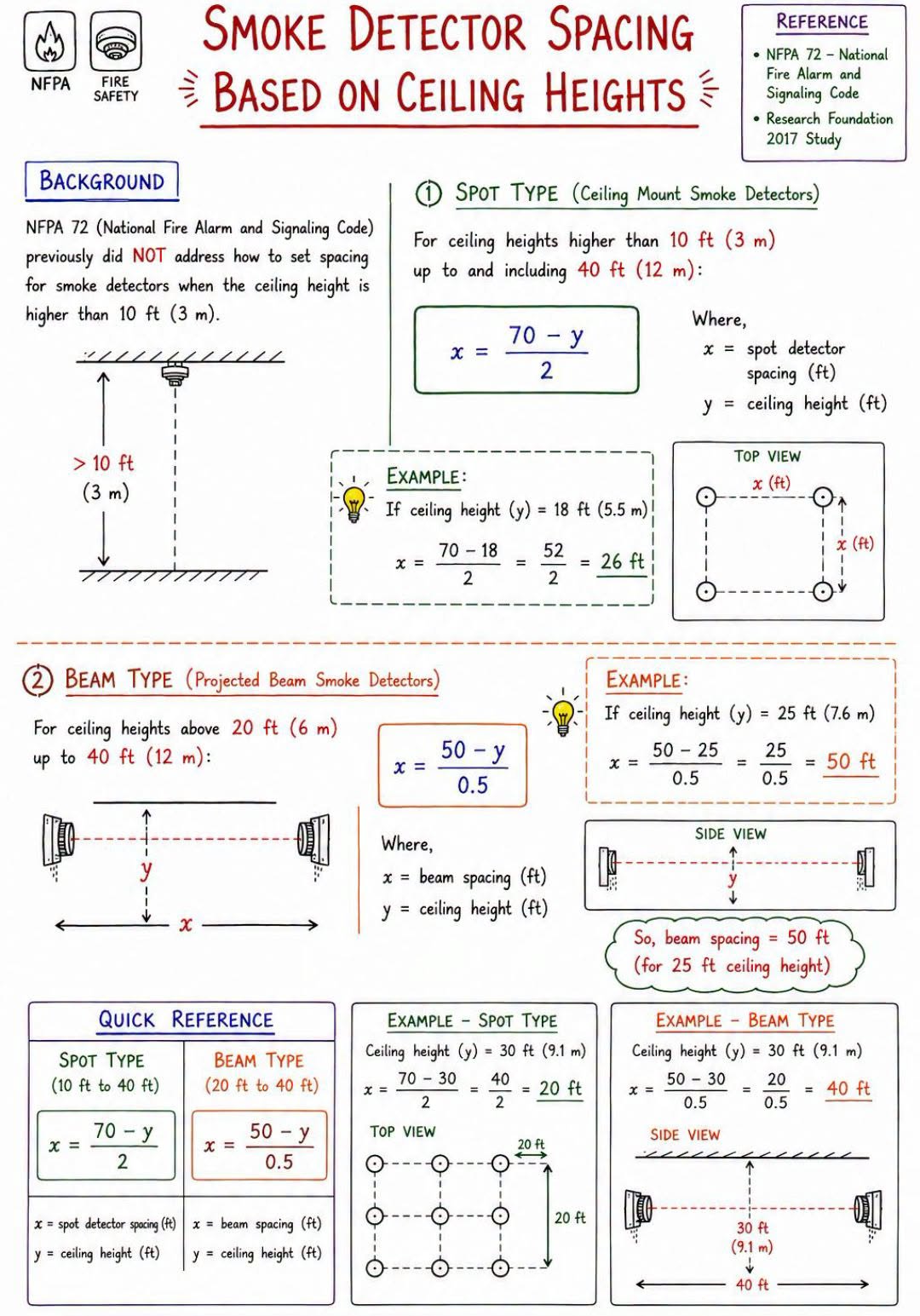
Smoke Detector Spacing for High Ceilings
A simple step-wise guide for calculating spot detector and beam detector spacing when ceilings are higher than normal.
- Spot type: for ceilings above 10 ft and up to 40 ft
- Beam type: for large open spaces above 20 ft and up to 40 ft
- Easy formulas: includes examples for 18 ft, 25 ft, 30 ft, and 40 ft ceilings
💡 Tip: Use the formula for quick checking, then confirm final spacing against NZS 4512, the approved fire design, and manufacturer data.
Open Spacing Guide
🔌 Wiring
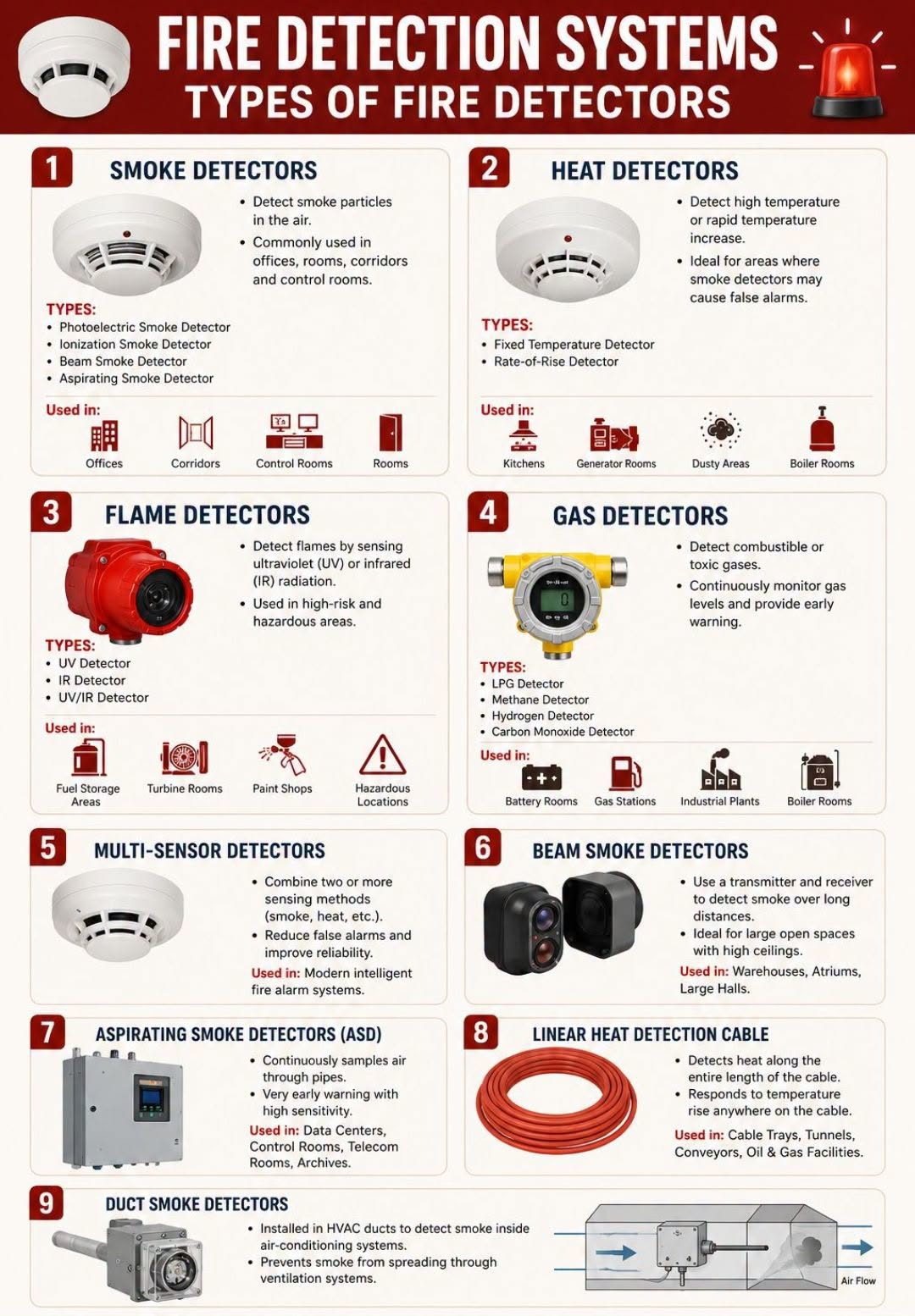
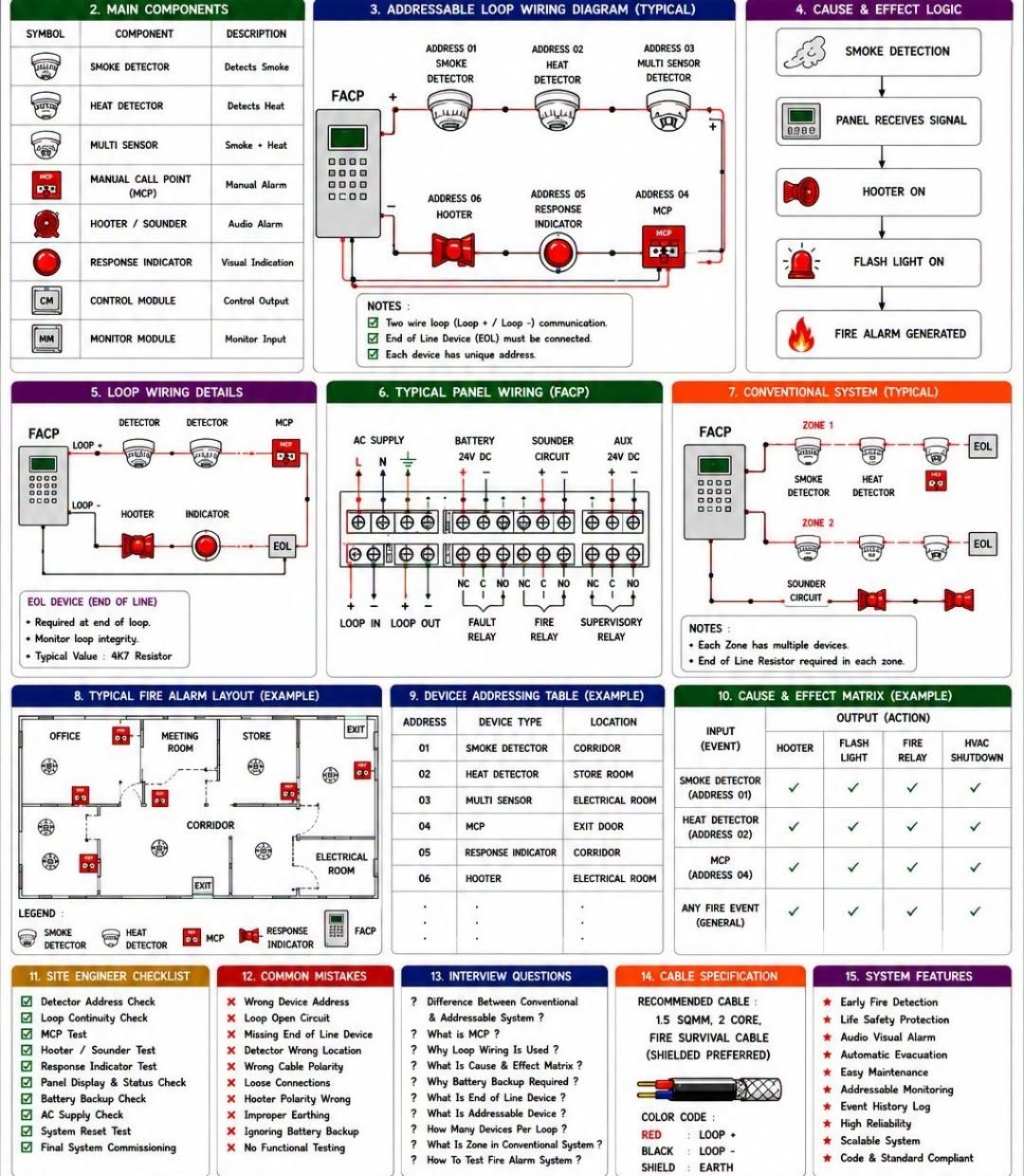
Fire Detection Systems and Loop Design
Simple guide to detector types, main fire alarm components, addressable loop wiring, conventional zones, and cause-and-effect logic.
- Detector types: smoke, heat, multi-sensor, beam, aspirating, duct, flame, gas, and linear heat
- Main components: FACP, MCP, sounder, response indicator, control module, and monitor module
- Loop design: device addressing, loop polarity, EOL checks, and panel wiring basics
💡 Tip: Before commissioning, check address, loop continuity, polarity, panel display text, cause-and-effect, and battery backup.
Open Wiring Guide
🎓 Career
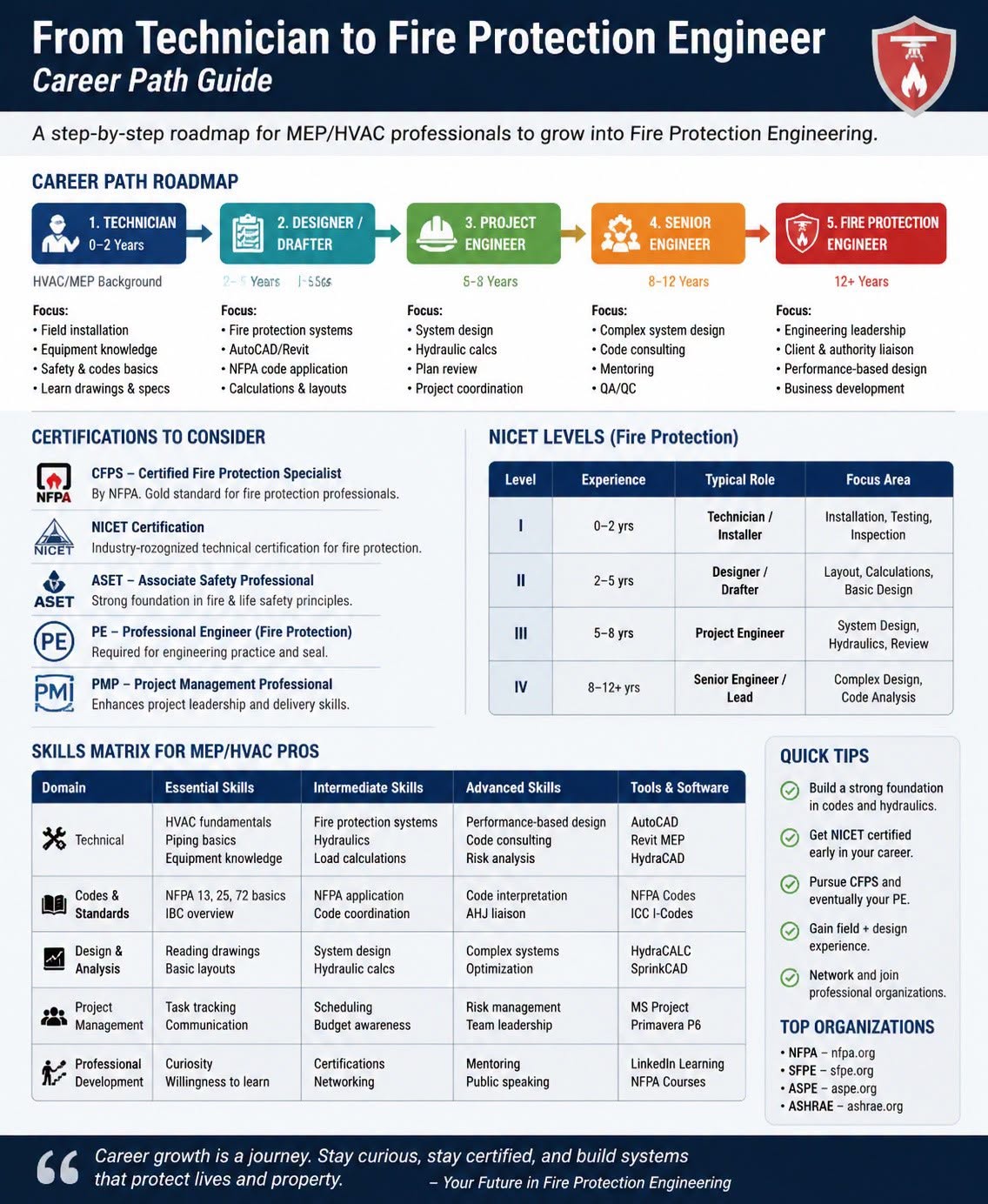
Technician to Fire Protection Engineer
A practical roadmap from field technician to designer, project engineer, senior engineer, and fire protection engineer.
- Start with field skill: installation, testing, equipment knowledge, and safety basics
- Build design skill: drawings, layouts, hydraulic calculations, code application, and plan review
- Grow leadership: QA/QC, mentoring, authority liaison, and performance-based design
💡 Tip: Keep learning codes, drawings, calculations, and project coordination. Field experience becomes very powerful when combined with design knowledge.
Open Career Guide
🔥 Fire Science
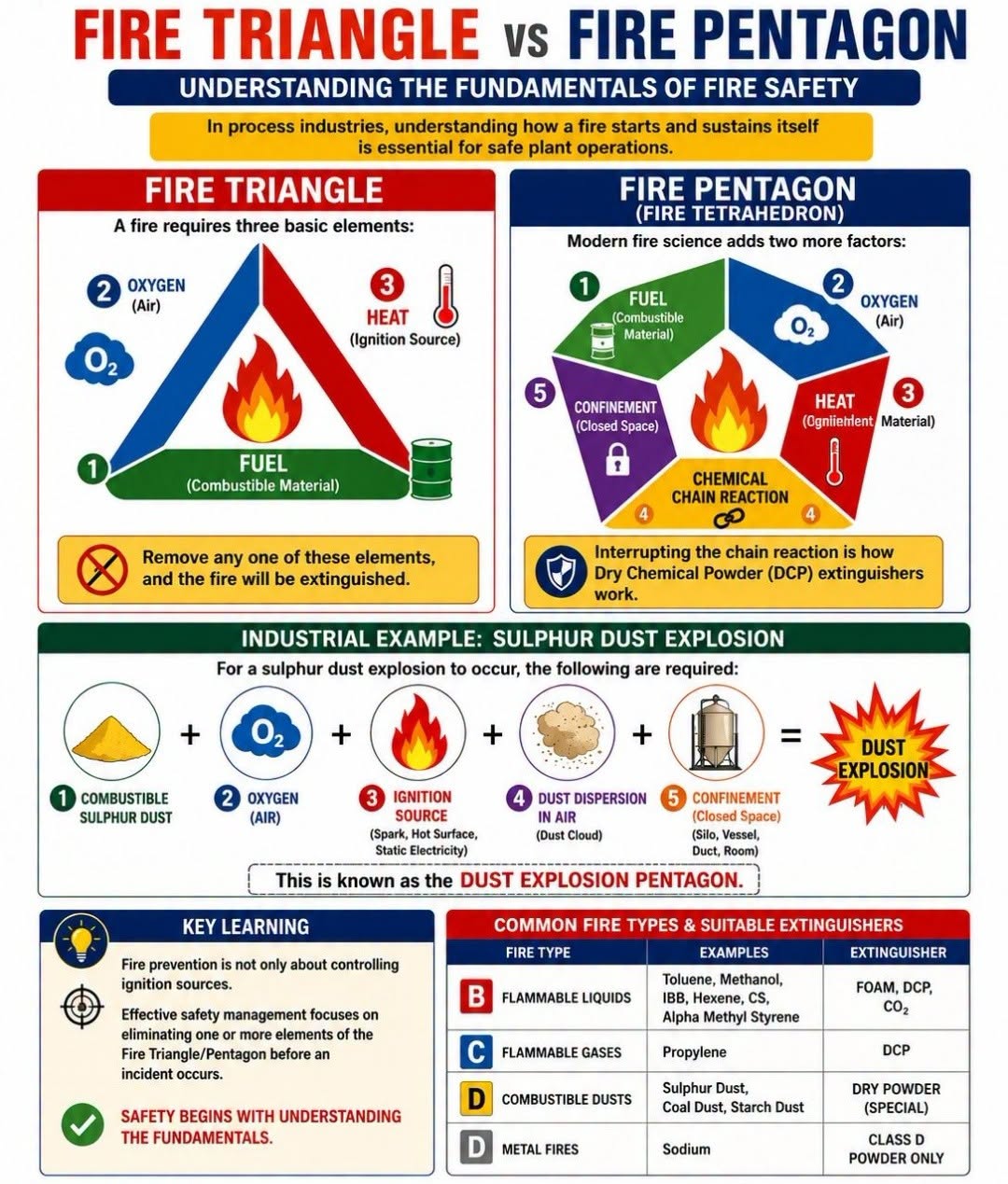
Fire Triangle vs Fire Pentagon
A simple guide to how fires start, how they spread, and why dust, vapours, and confined spaces can create major explosion risk.
- Fire triangle: fuel, oxygen, and heat
- Fire pentagon: adds chemical chain reaction and confinement
- Prevention: control ignition, housekeeping, ventilation, and correct extinguisher selection
💡 Tip: Remove one required fire element and the fire cannot continue. This is the foundation of fire prevention.
Open Fire Science Guide